

Interviewing delegates on the sidelines of the 2025 Autumn Economic Forum, held from November 25–27 in Ho Chi Minh City, The World & Vietnam Report recorded various perspectives from international delegates on green and digital development trends, along with policy recommendations that Vietnam and Ho Chi Minh City can consider when shaping their development strategies.
Mr. Ogiso Hiroyasu, Director of the Economic and Tourism Center of Hyogo Prefecture (Japan), emphasized that the integration of digital and green technologies is becoming key to achieving global carbon neutrality goals. According to him, technologies such as IoT, AI, and GIS not only enhance governance efficiency but also directly reduce emissions by optimizing operations.
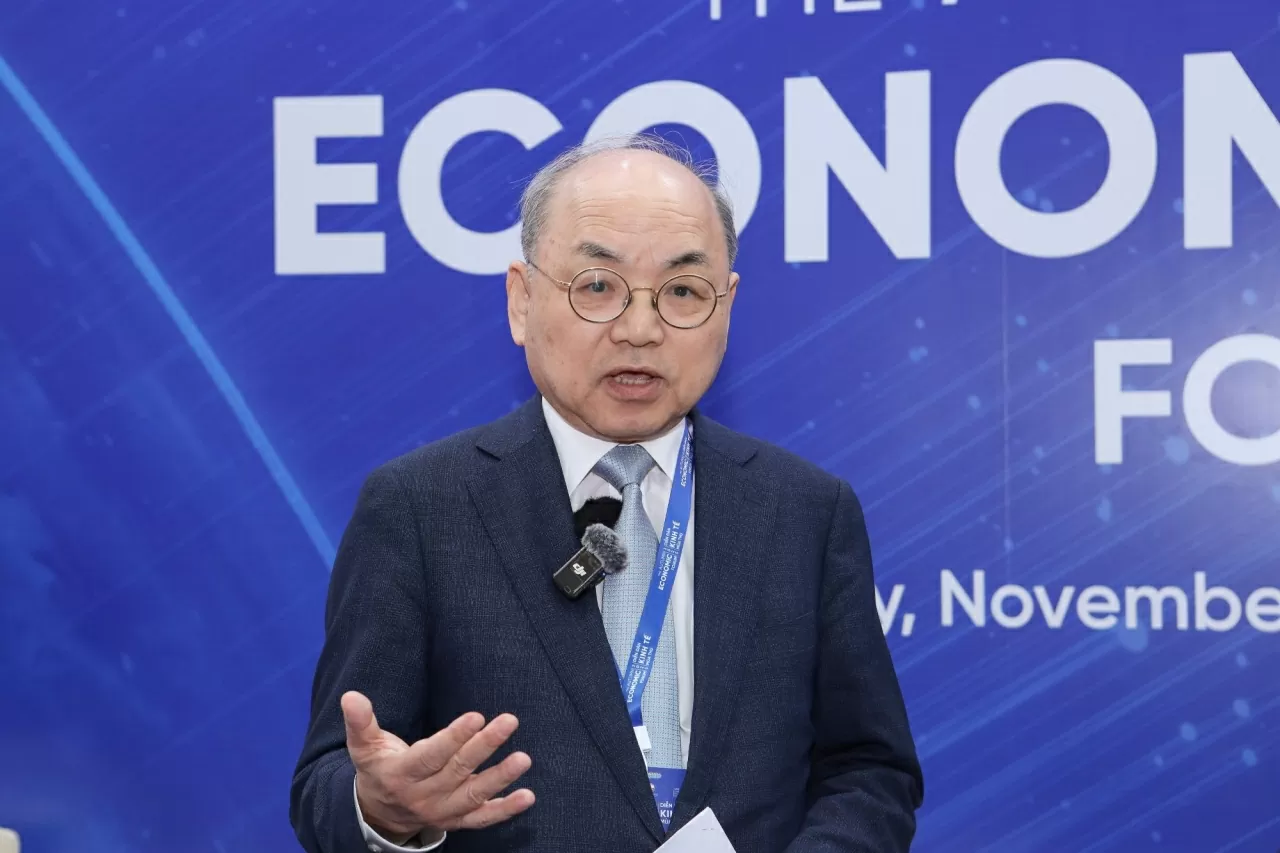
Mr. Ogiso Hiroyasu, Director of the Economic and Tourism Center of Hyogo Prefecture (Japan). (Photo: Sy Dieu)
He noted that automation and accurate demand forecasting have helped Hyogo significantly cut greenhouse gas emissions by shortening logistics routes, reducing resource waste, and saving energy. In the prefecture, nearly 70% of emissions come from industrial and business sectors, prompting authorities to develop phased support systems—from raising awareness of carbon neutrality, measuring emissions, and planning reductions, to ensuring transparent data sharing.
Hyogo also provides financial support packages and green transition assessments, enabling small and medium-sized enterprises—which make up the majority of the economy—to actively participate in the green-digital transition.
Assessing global and regional economic prospects, Mr. Ogiso cited the latest forecasts from the International Monetary Fund (IMF), indicating that growth in both developed and developing economies is slowing. However, he stressed that “slower growth does not mean regression,” as long-term sustainable development drivers will continue to shape both public and private sector policies.
Hyogo is increasing investment in strategic sectors such as new energy, aircraft manufacturing, robotics, medical technology, and semiconductors to build a sustainable economy. He also described the 2025 Autumn Economic Forum as creating a “positive spillover effect,” helping shape development trends at the regional level.
Regarding development strategies for Ho Chi Minh City, Mr. Ogiso affirmed that the United Nations Sustainable Development Goals (SDGs) should serve as the fundamental foundation for all countries and localities. In Hyogo, SDGs are implemented in collaboration with businesses, social organizations, universities, and communities, ensuring that “no one is left behind.”
He added that Vietnam and Hyogo share many similarities in forward-looking development thinking, and that mutual learning and experience-sharing would bring practical benefits.
Presenting solutions to reduce environmental impacts during the dual transition, Mr. Ogiso highlighted the hydrogen model—a field in which Hyogo leads Japan.
The prefecture hosts many strong enterprises in hydrogen production, transportation, and storage, while also concentrating industries with high hydrogen demand such as power generation, metallurgy, and chemicals. Numerous pilot programs—such as hydrogen-powered co-firing, hydrogen supply chain development, and large-scale hydrogen transport technologies—are being actively implemented, driven by the private sector.
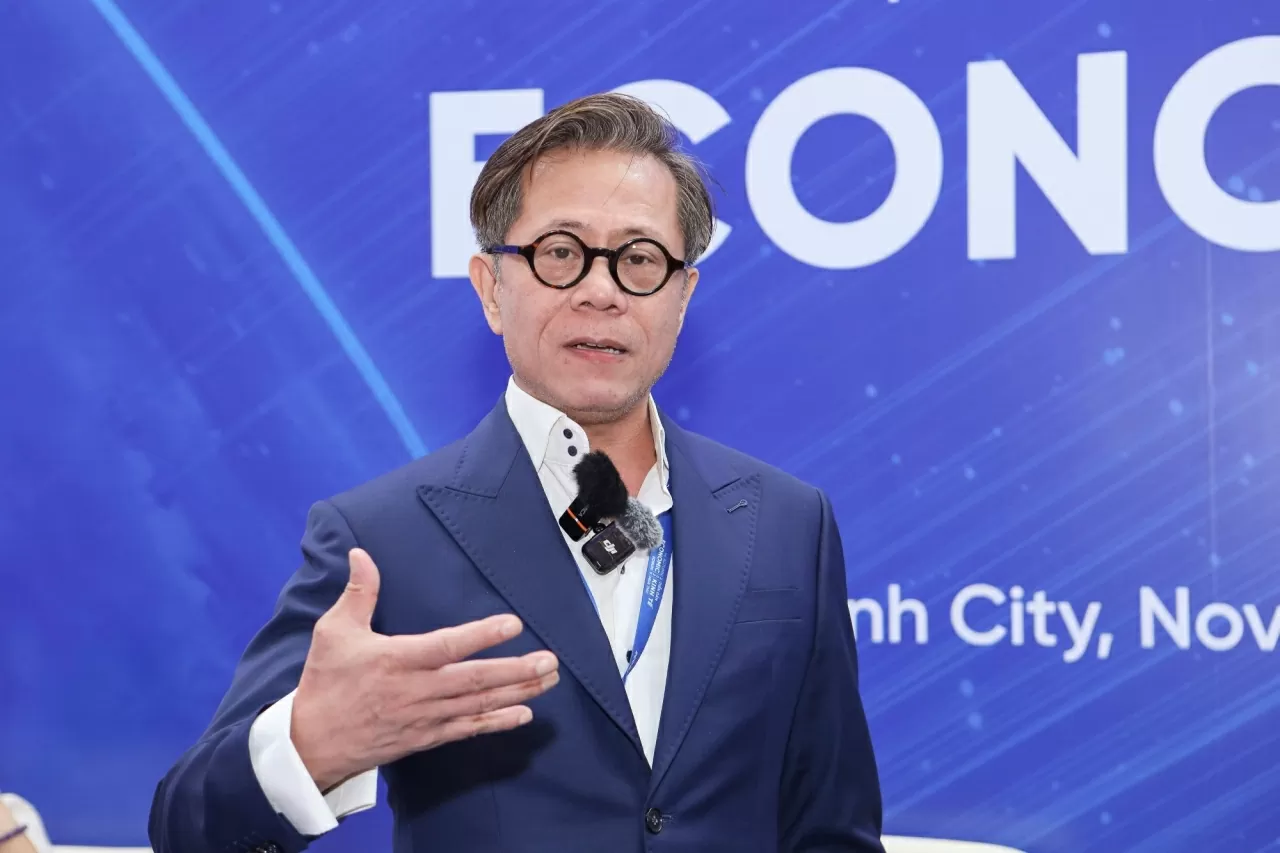
Mr. Sunkook Kwon, Secretary General of the Asian Science Park Association (ASPA), South Korea. (Photo: Sy Dieu)
At the same time, Hyogo is expanding hydrogen refueling infrastructure, developing hydrogen-powered vehicles, and encouraging businesses to install rooftop solar systems and biomass energy solutions. Notably, the Harima coastal area, home to heavy industries, is implementing plans to green the Himeji and Higashi-Harima ports, aiming to become carbon-neutral ports by 2050.
Mr. Sunkook Kwon, Secretary General of the Asian Science Park Association (ASPA), South Korea, stated that the theme of this year’s forum aligns with ASPA’s goal of developing cross-Asian innovation ecosystems.
He emphasized that science parks serve as platforms connecting policy, technology, and businesses—facilitating the development of numerous experimental models and new applications. They also provide an ideal environment for countries to achieve dual objectives: modernization and sustainable development.
According to him, Vietnam, Ho Chi Minh City, and many developing countries face the same challenge: achieving rapid growth without compromising the environment. Experiences from Japan and South Korea show that science parks can offer effective solutions to pursue modernization, digitalization, and green transformation simultaneously.
Mr. Bernaed Grellier, Head of Retail for Asia at Diebold Nixdorf. (Photo: Sy Dieu)
Mr. Bernaed Grellier, Vice President for Retail in Asia at Diebold Nixdorf, noted that in the retail sector, digital transformation and green development are not separate but mutually reinforcing.
He explained that Diebold Nixdorf is designing retail systems with high modularity, energy efficiency, and reusability, helping retailers reduce operational costs, minimize waste, and improve efficiency.
According to him, sustainability-driven innovations—such as reducing material usage, optimizing energy flows, and digitizing management—are not only trends but also key factors in enhancing long-term competitiveness.
Source: Baoquocte.vn (https://baoquocte.vn/)

